
Understanding Double Extraction in Internet Governance
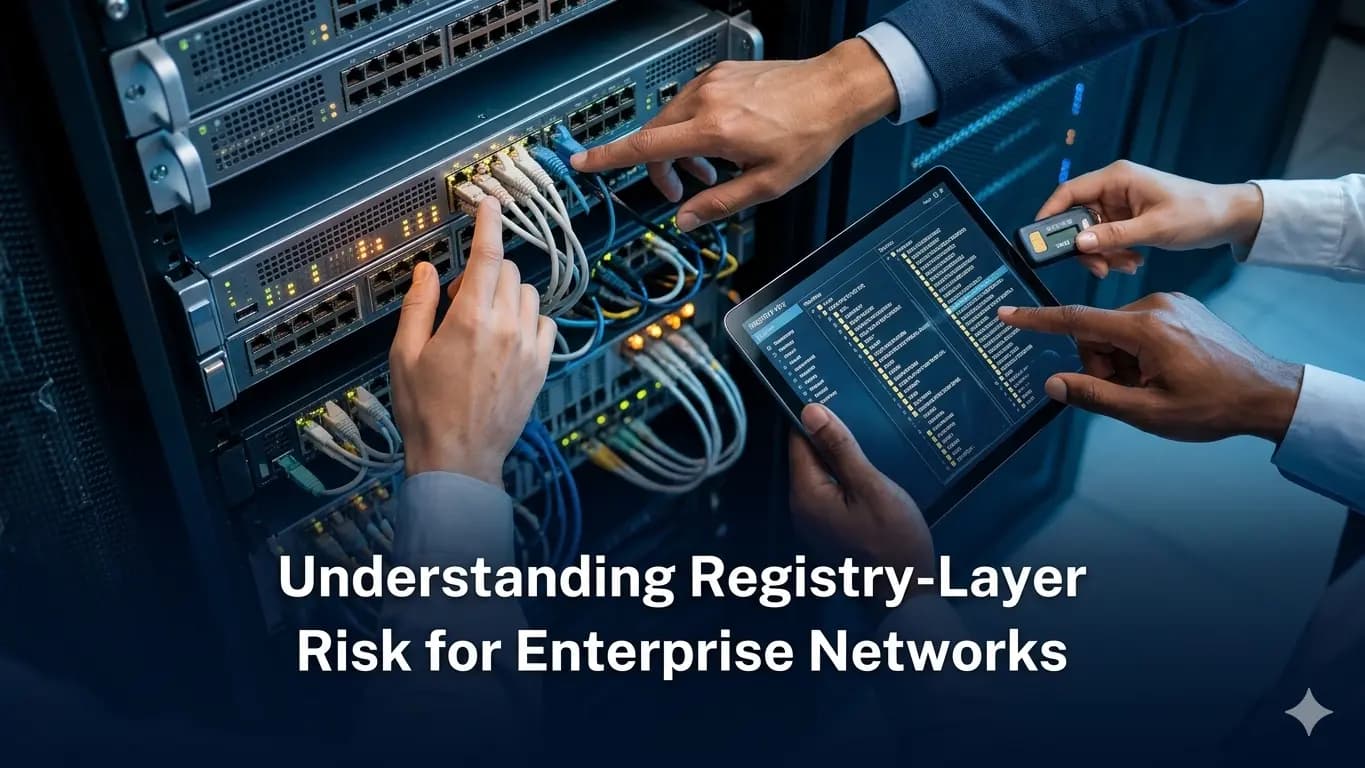
Introduction: Why Internet Governance Is Becoming an Economic Question
The debate around Internet governance is often framed in technical or administrative terms, but it increasingly sits at the intersection of infrastructure and capital. In the context of the Internet Protocol system, especially IPv4, governance structures are no longer just coordination mechanisms — they are interacting with scarce, transferable, and increasingly capitalized resources.
This matters because operators still carry the full operational and downside exposure of running live networks, while the asset upside of number resources is shaped by registry recognition, scarcity and market structure. That mismatch is what this article describes as double extraction.
1. From Registry Coordination to Economic Conditioning
Historically, Internet registries were designed to coordinate low-stakes technical records. Organizations such as IANA and Regional Internet Registries like RIPE NCC, ARIN, and APNIC were built to ensure global uniqueness of Internet number resources.
At the time, this was sufficient. The system assumed that number resources were administrative coordinates rather than balance-sheet assets. But IPv4 scarcity changed the assumptions. Once addresses became transferable, valuable, and market-visible, the registry layer began to sit above something closer to an asset market than a coordination table.
This shift matters because the registry function now shapes economic outcomes. It influences who can consolidate control, who can move assets efficiently, and who bears the cost of ambiguity when operational dependency meets institutional discretion.
2. The Core Idea: Uniqueness as the Only Legitimate Governance Layer
At the foundation of Internet governance is a single non-negotiable requirement: global uniqueness. Without uniqueness, routing breaks, services fragment, and interoperability collapses.
Uniqueness is therefore the only truly necessary function of the registry layer. It enables devices and networks to interact as a single global system rather than fragmented regional islands.
However, uniqueness is a very narrow problem. It does not require broad discretionary authority, opaque financial conditioning, or asset-style dependence on institutional approval. When governance expands beyond uniqueness coordination, the registry layer starts to function like an economic gate rather than a neutral technical coordinator.
- Coordinate uniqueness so networks remain interoperable.
- Avoid using registry power to reshape market outcomes unrelated to uniqueness.
- Preserve a clean boundary between technical coordination and asset recognition.
3. What “Double Extraction” Means
The term double extraction refers to two simultaneous effects. Operators continue to bear the risk of the registry decisions, including allocation changes, disputes, policy shifts, and recognition uncertainty. Their infrastructure, contracts, and business continuity depend on registry stability.
At the same time, the full capital value of IPv4 holdings is not always recognized as a stable, financeable asset class. Uncertainty, transfer friction, and non-asset framing reduce liquidity and constrain valuation.
Together this creates a structural asymmetry: operators absorb full downside while the upside available to registry-stable assets remains partially suppressed by institutional ambiguity.
- Downside exposure remains with operators.
- Upside is partially suppressed by governance uncertainty.
- The mismatch behaves like an economic tax on network-dependent businesses.
This is not traditional taxation or fee extraction. It is a coordination layer shaping asset conditions without fully bearing equivalent liability.
4. IPv4 as a Scarce Capital Asset
IPv4 addresses are no longer just identifiers. They function as scarce, transferable inputs into digital infrastructure. Each address can enable hosted services, network functions, or customer-facing systems that generate recurring revenue.
Because the supply is fixed at approximately 4.3 billion addresses and the routable practical supply is even tighter, scarcity is structural, not cyclical. That scarcity gives IPv4 many properties of a quasi-capital asset.
- It can be leased.
- It can be transferred.
- It can be priced in markets.
- It can be integrated into financing and operating decisions.
In this context, infrastructure scarcity becomes economically meaningful at a global scale, not just a technical inconvenience.
5. The Registry Layer and Asset Certainty
Capital markets depend on certainty. Without predictable recognition of ownership and transferability, assets cannot be fully priced, financed, or leveraged.
The argument behind double extraction is that registry structures introduce a certainty ceiling. They preserve operational function but do not always support stable economic recognition. As a result, successful network operators can find that the infrastructure they depend on is still treated as administratively contingent rather than economically mature.
Even if market demand exists, the ability to turn resource holdings into strategic optionality depends on the confidence that rights and recognition will persist through disputes, governance changes, and representation conflicts.
6. Why Governance Models Struggle With This Shift
Traditional Internet governance frameworks were not designed for asset-class dynamics. They evolved around coordination, not capital markets. As a result, several structural mismatches emerge once IPv4 is scarce and transferable.
- Asset-like behavior meets registry language that still treats resources as administrative allocations.
- Participation and representation gaps mean operators do not always shape the conditions that affect their own assets.
- Authority without equivalent liability lets decision-making bodies influence economic outcomes without bearing operational cost.
This does not imply malicious intent. It reflects institutional design lag — systems optimized for coordination now interacting with capital-scale scarcity.
7. The Operator Perspective: Where the Cost Becomes Visible
From an operator standpoint, the effect of this structure is concrete. They may hold thousands of IPv4 addresses, each of which carries meaningful service dependency and economic value. Yet their ability to fully recognize, finance, or leverage that value depends on registry-defined conditions.
At the same time, they remain dependent on continued registry recognition for operational continuity. This creates a dual condition: downside remains fully exposed while upside remains structurally constrained.
In economic terms, that is the essence of double extraction — compressed upside combined with full downside dependency.
8. Systemic Implications: Efficiency, Not Just Fairness
The issue is not only distributive fairness. It is also system-wide efficiency. When asset recognition is suppressed, capital allocation becomes less efficient, liquidity is reduced, and investment decisions are distorted.
The cost is not just borne by operators. It is distributed across the broader digital economy because scarce resources remain entangled in governance uncertainty rather than flowing toward their most productive uses.
As IPv4 scarcity intensifies, the inefficiency compounds across infrastructure, cloud services, and network economics.
Conclusion: Toward a Minimal Uniqueness Layer
The core insight behind double extraction is that Internet governance is increasingly operating above a base layer of economically significant scarcity while still behaving as if it were coordination-only infrastructure.
The long-term solution is not to abandon coordination. It is to preserve a minimal uniqueness layer focused strictly on uniqueness, while separating legal enforcement of property rights from technical coordination.
- Coordination of identifiers.
- Legal recognition of property rights.
- Economic recognition of assets.
When uniqueness is preserved with minimal discretionary expansion, the system is more stable. When the registry layer reaches beyond uniqueness, it creates structural tension that operators must absorb.
FAQ
1. What is Running-Code Betrayal?
Running-Code Betrayal is the risk that policy process, registry procedure, or institutional interpretation may be used in a way that threatens already-running networks. It describes a reversal of the Internet principle that operational reality should guide governance.
2. Why does NRS focus on operators?
NRS focuses on operators because operators carry the real downside when Internet number resources become disputed, delayed, mismanaged, or placed under uncertainty. Operators run the infrastructure, serve the customers, and absorb the business impact when continuity is threatened.
3. Is NRS against registry coordination?
No. Registry coordination remains important for uniqueness, accuracy, and operational trust. NRS is concerned with accountability, continuity, and ensuring that coordination does not become detached from the running networks it is supposed to support.
4. How can registry risk affect a business?
Registry risk can affect a business through delayed transfers, recognition uncertainty, documentation disputes, routing problems, legal cost, emergency migration, customer disruption, or reduced confidence in number-resource continuity.
5. How does NRS help reduce operator isolation?
NRS helps reduce operator isolation by encouraging documentation, case learning, operator education, and shared visibility into registry-layer risk. This helps operators understand that individual issues may be part of broader structural patterns.
You Might Also Like

Leave a Reply
You must be logged in to post a comment.